
Every December, I step back and ask what actually stuck this year. What worked. What didn’t. This year, I realized something simple: my system of record is Notion, and it only works because everything is connected.
I didn’t build this from scratch. I took inspiration from Ali Abdaal’s productivity work, August Bradley’s Notion Life Design system, Ryder Carroll’s bullet journaling approach, and a few others. But I didn’t copy any of them directly. Instead, I took what made sense for how I actually work and built around that.
At work, I log activities daily. Those entries roll up into monthly summaries. The monthly summaries feed into quarterly views. The quarterly views roll into yearly. So I can pull up any timeframe and see exactly what happened. No guessing.
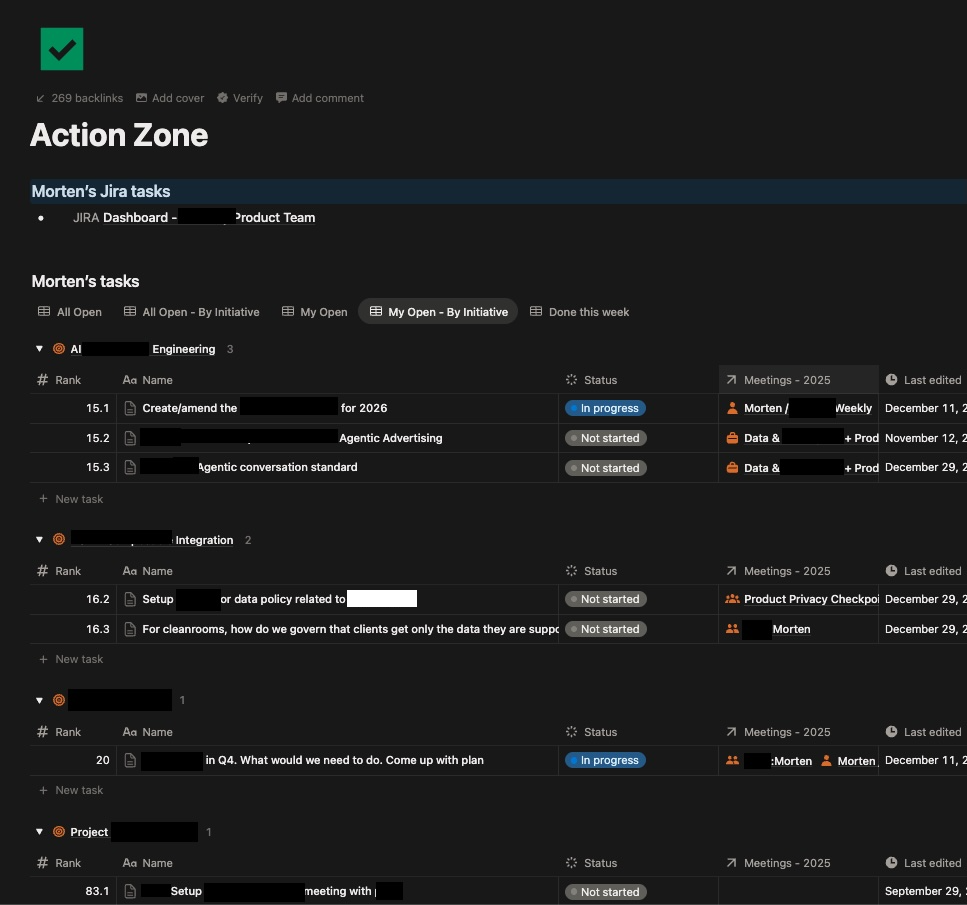
But that’s just the base layer. On top of it, I have databases for meetings, recurring meetings separately, risks, incidents, initiatives, sales opportunities, tasks, contacts, and organizations. Most systems would be a mess at this point. Mine isn’t, because I linked them.
Why the Connections Matter
A task connects to the initiative it supports. An initiative connects to the contacts and organizations involved. Meetings link to attendees. Those attendees connect back to their organizations. A risk gets linked to the initiatives it might impact.
This sounds abstract until you actually need the information. Say I have a meeting coming up with someone from a company I’ve been talking to for months. I pull up that organization in Notion. From there, I see every linked task related to them, every past meeting we’ve had, every open opportunity, and any risks that could affect the deal. I’m not scrambling through emails trying to remember the last conversation. The context is already there.
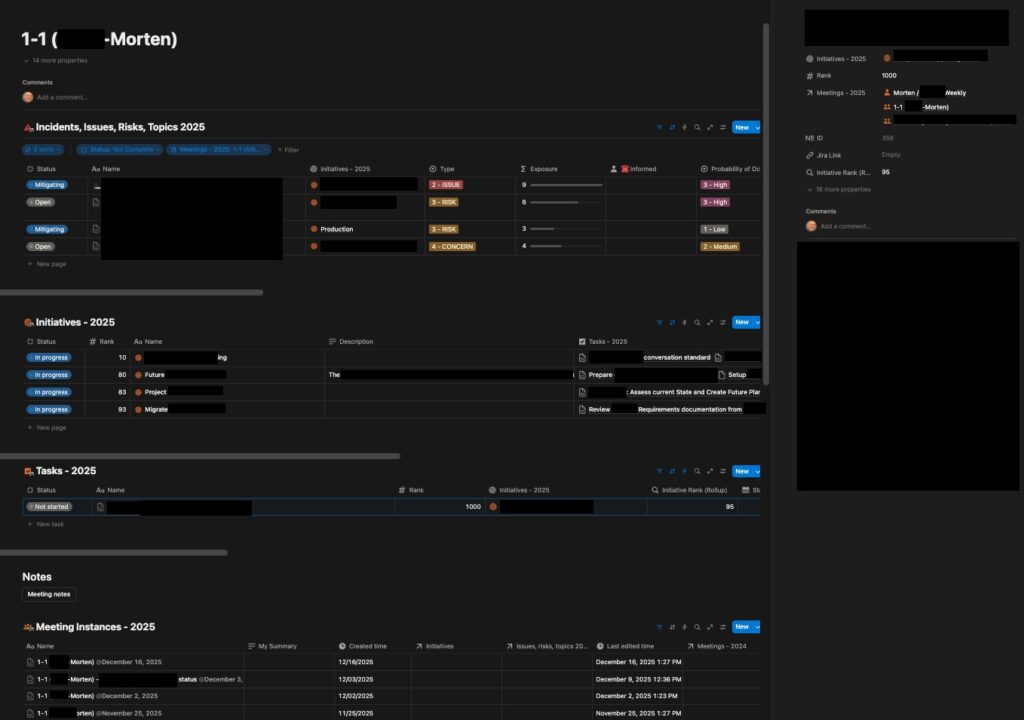
Without the links, each database is just a list. With them, each database becomes a way to see the same information from different angles. A task tells you what you’re doing. An initiative tells you why. A meeting tells you who you’re doing it with. But only if they’re talking to each other.
How It Adapts
The system changes as my work changes. A few months ago, I realized the recurring meetings database was necessary because recurring meetings drift. Schedules shift. Dates change. Having a dedicated space for them means I’m not lost when someone asks “is this meeting still happening?”
That’s the real strength of Notion for me. I can add a database when I need it. I can change how things connect when the work demands it. I don’t have to rebuild the whole thing. I just add the piece that’s missing or restructure the links that aren’t working.
A year from now, something else will probably need to change. And I’ll change it. The system is built to move with me, not against me.
What Actually Gets Maintained
Here’s what surprised me during this reflection: not all of these databases matter equally. The daily activity logs are non-negotiable. The initiatives database is the same. Those two drive everything else. The meetings database, the tasks database, the contacts and organizations, they all feed off those two.
Some databases get reviewed religiously. Others sit dormant for months. And that’s fine. The ones that solve an actual daily problem get used. The ones that seemed like a good idea at the time don’t. There’s no point forcing discipline on something that doesn’t create friction when it’s ignored.
Next year, I’m confident this system will still be here. But it probably won’t look exactly the same. It never does. And that flexibility is exactly why it works.